
Social media platforms, such as Facebook, Instagram, X (formerly Twitter), LinkedIn, and many others, all serve as windows into a person’s life, both personally and professionally. During a personal injury claim, our advice to our clients is straightforward: Stay off social media.
Learn more about our Sacramento Personal Injury Attorney Services.
Anyone who has ever watched someone get arrested in a crime drama has heard this line: “Everything you say can and will be used against you.” The warning is clear: Stop talking.
While you might think of a post as totally harmless, almost anything can be taken out of context or twisted to suggest a different meaning. This can significantly delay your claim and affect your compensation.
Tell Your Friends and Family: Your Life is Off-Limits on Social Media
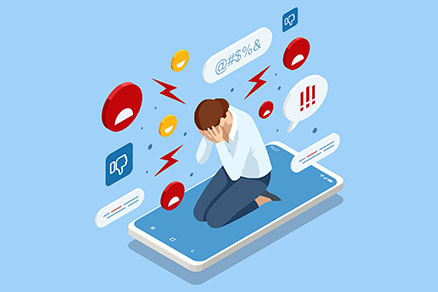 Even if you are being careful (i.e., not posting, period) on social media during a personal injury claim, friends and family could unintentionally harm your case. Therefore, consider putting your friends, family, and coworkers on notice: You and your life are off-limits. This includes tagging, you in photos uploaded to other people’s pages.
Types of Damage Social Media Can Do to a Personal Injury Claim
Social media content can be easily misinterpreted or taken out of context in ways that can harm your attorney’s ability to prove your case, including the severity of injury, the extent of property damage, and the level of pain and suffering you are experiencing. Remember: Insurance companies will be looking for any excuse to reduce their payout.
Here are a few of the specific ways social media can harm your personal injury claim.
- Social media posts may include information that conflicts with the facts of the claim.
One of the most common ways in which social media can harm your case is through posts that don’t mesh with how severe your reported injuries are.
Here’s an example: You have a severely injured knee as a result of a car accident and have undergone surgery to repair torn ligaments and a damaged ACL. You may not be returning to your construction job as a result. Posting a vacation image from last summer waterskiing on Lake Tahoe can give insurers the ammo they need to claim you’re not as hurt as you say.
Can you prove when the image was taken? Even if you can, complications like this can significantly slow down the progress of a claim and delay your compensation.
- Social media posts may damage your credibility.
Even when medical reports and evidence seem to support your claim, it is in your best interests to remain a credible source of information as a person who uses good judgment. Even if a social media post is unrelated to your injury, it could damage your character.
Here’s an example: You’re involved in a slip-and-fall accident in which the facts are being disputed; there are no eyewitnesses to corroborate exactly how the incident happened. It’s a classic “he said-she said” situation. In claims like this, your character becomes an essential element. Suddenly, a picture pops up on your friend’s social media page with you tagged in it. There you are in several images taken at various establishments on New Year’s Eve, a month before the accident. You’re having fun, maybe too much fun, along with lots of people you may not even know, some of whom are engaged in various activities that may or may not be legal.
The opposing insurance company, and if it goes that far, a jury, may become prejudiced against you as someone who engages in risky behavior and, therefore, not a source of reliable information.
- Social media posts could be seen as an admission of fault.
What may feel like venting on social media following an accident or other incident in which you get injured due to someone else’s negligence may come back to haunt you. In the hours after an injury, it would be completely normal to be emotional; after all, you’re still feeling the effects of the adrenaline, and you’re angry.
Here’s an example of a post: “Stupid dog! Stupid owner! The CUTEST Labradoodle was running around up ahead of me without a leash. I should’ve just crossed the street, but it looked harmless. Now I have a dog bite, a sling on my arm, and I can’t play tennis!”
This post opens up the possibility of comparative negligence, which is when the injured party may bear some portion of responsibility for an injury. In this post, she admits to noticing a risk and her choice not to avoid it; she also describes the dog that bit her as looking harmless. Additionally, her post could easily be interpreted to mean she merely feels inconvenienced by the injury because she can’t play tennis. But in fact, the injury required surgery to repair tendon damage, which may result in permanent nerve damage (none of which was mentioned).
At the end of the day, an off-leash dog bit someone in an unprovoked attack, period. The post may make it more challenging (and more time-consuming) for her attorney to prove her case and affect her compensation.
Support for Victims of Trauma
If you have been injured in a traumatic accident and need support, help is available. UC Davis Medical Center offers many support groups and other resources depending on the type of help that is needed. Visit the Trauma Survivor’s Network for more information. You can also ask us about other resources at your free consultation.
Find a Personal Injury Attorney to Handle Your Claim
If you’ve been injured and need to know if you have a personal injury claim, call a Sacramento personal injury attorney at Eason & Tambornini to increase your chances of a successful claim outcome. Schedule a free consultation at (916) 438-1819. We work on a contingency-fee basis, so you pay nothing unless you win a settlement.